Elbow |
|
Golfer's
Elbow/ Medial Epicondylitis:
This is a repetitive strain injury resulting in inflammation
of the wrist flexor muscle group where they attach on
the inside of the elbow. You don't have to be a golfer
to get this condition. Symptoms include pain at the
inside of the elbow where the wrist flexors attach and
decreased strength of the wrist with elbow pain felt..
Treatment includes:
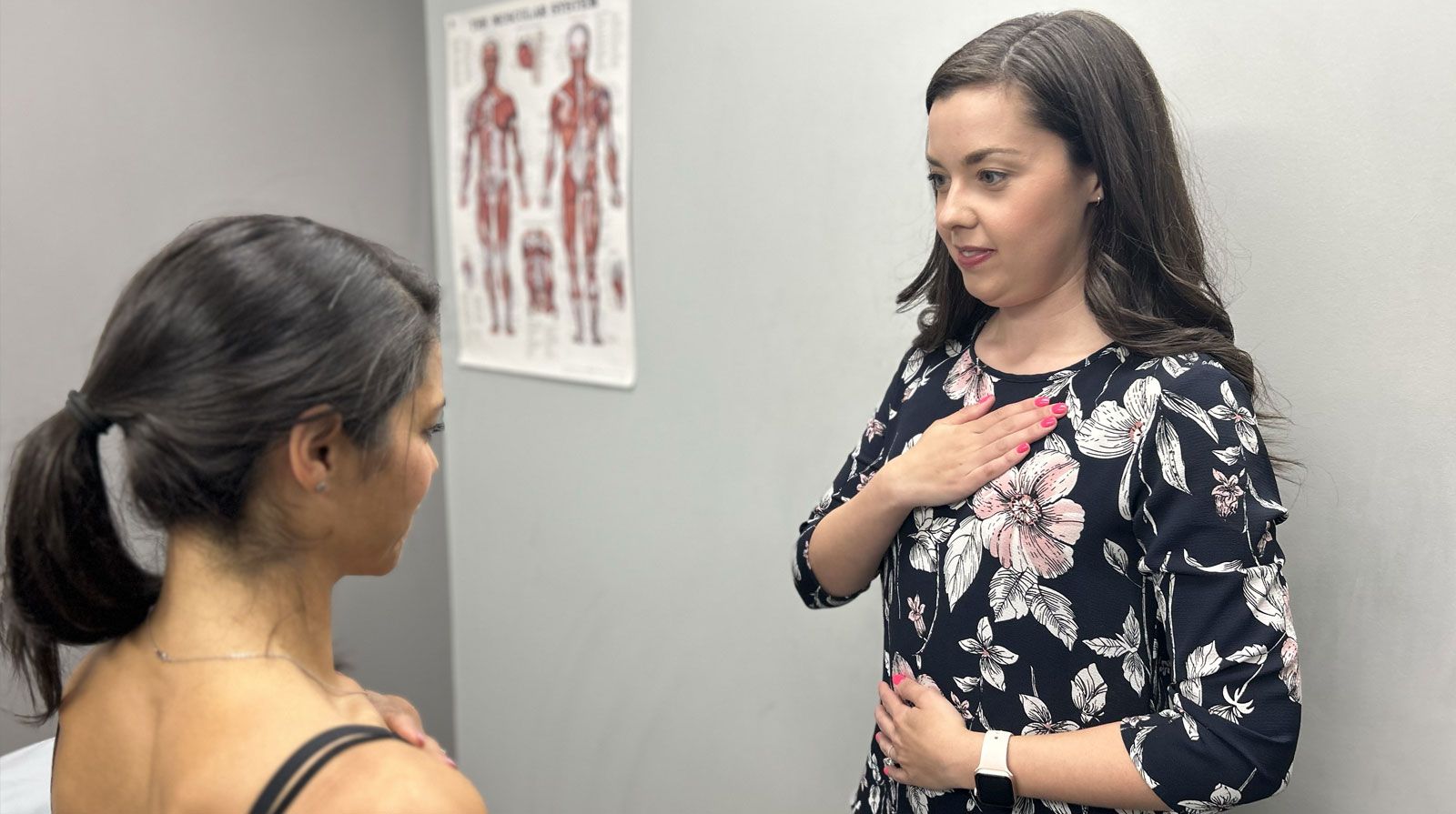
Education about the condition and how to avoid making
it worse, which may include how to properly sit at a
computer work station, etc.
Therapeutic modalities to improve circulation and/or
reduce inflammation and pain such as ultrasound, laser,
interferential current, electrical muscle stimulation,
acupuncture.
Exercises to stretch or strengthen the appropriate muscles
or stabilize the joint.
Manual therapy to improve the movement in the area.
Tape may be beneficial at taking the stress off the
affected muscles as the inflammation decreases.
|
Broken Elbow/Olecranon Fracture/Radial Head Fracture:
The elbow is most commonly broken with direct trauma or falling directly onto the elbow. After a period of immobilization in a cast, the elbow may be stiff with decreased range of motion evident. It may be painful to move the arm due to this stiffness.
Treatment includes:
Education about the condition and how to avoid making
it worse.
Therapeutic modalities to improve circulation and/or
reduce inflammation and pain such as ultrasound, laser,
interferential current, electrical muscle stimulation,
acupuncture.
Exercises to stretch or strengthen the appropriate muscles
or stabilize the joint.
Manual therapy to improve the movement in the area.
|
Bicipital Tendonitis:
Tendonitis is an inflammation of a tendon. A tendon is the thick fibrous cord that attaches muscle to bone. Bicipital tendonitis is a repetitive strain injury that results from increased friction of the biceps tendon against its bony groove resulting in pain and inflammation of the tendon. It is aggravated with lifting and pain is usually worse after activity.
Treatment includes:
Education about the condition and how to avoid making it worse, which may include hints on how to lift safely.
Therapeutic modalities to improve circulation and/or
reduce inflammation and pain such as ultrasound, laser,
interferential current, electrical muscle stimulation,
acupuncture.
Exercises to stretch or strengthen the appropriate muscles
or stabilize the joint.
Manual therapy to improve the movement in the area.
|
Bone Formation in Soft Tissue Surronding the Elbow/Heterotopic Ossification/Myositis Ossificans/Periarticular Calcification/Ectopic Ossification:
After an injury to the soft tissue surrounding the elbow, it is possible for the body to lay down bone at the injured site where there was not bone before. This may happen if the tissue is stretched too much after injury when the bruising has led to bleeding in the area. Pain and decreased range of motion (that usually resolves quickly with a bruise), remains with this condition. Bony fragments can be seen on X-ray, which diagnoses this condition.
Treatment includes:
Education about the condition and how to avoid making it worse, which may include a period of rest and/or immobilization.
Manual therapy to improve the movement in the area after the bone growth has stopped.
|
Little Leaguer's Elbow:
This condition is common in young baseball players who are learning the proper technique of throwing a baseball, or throw too many balls. The muscles used during throwing attach on the inside of the elbow and injury results in tearing of a small part of the bone away from its attachment. The patient has pain on the inside of the elbow, and decreased movement with locking or catching is experienced.
Treatment includes:
Education about the condition and how to avoid making it worse, which may include a period of rest and/or immobilization.
Therapeutic modalities to improve circulation and/or
reduce inflammation and pain such as ultrasound, laser,
interferential current, electrical muscle stimulation,
acupuncture.
Exercises to stretch or strengthen the appropriate muscles
or stabilize the joint.
Manual therapy to improve the movement in the area.
|
Pulled Elbow/Radial Head dislocation:
This condition is common in young children and happens when the child's arm is pulled. “Hurry up, Johnny!! Oops.” The radius (one of the bones in the forearm) is pulled out of place at the elbow as the ligament can’t hold the radial head in position. The child experiences pain and decreased movement of the arm.
Treatment includes:
Education about the condition and how to avoid making it worse, which may include a period of rest and/or immobilization.
Manual therapy to reduce the dislocation.
|
Sprained Elbow:
The most commonly sprained ligament of the elbow is the medial collateral ligament (MCL) located on the inside of the elbow. Less commonly, the lateral collateral ligament (LCL) may be sprained. A sprained elbow occurs when the arm is twisted in such a way as to stretch the ligament past its normal range of motion. Symptoms include pain on the inside or outside of the elbow, decreased range of motion, especially when the ligament is stretched.
Treatment includes:
Education about the condition and how to avoid making it worse, which may include a period of rest and/or immobilization.
Therapeutic modalities to improve circulation and/or
reduce inflammation and pain such as ultrasound, laser,
interferential current, electrical muscle stimulation,
acupuncture.
Exercises to stretch or strengthen the appropriate muscles
or stabilize the joint.
Manual therapy to improve the movement in the area.
|
Tennis Elbow/Lateral Epicondylitis:
This is a repetitive strain injury resulting in inflammation of the wrist extensor muscle group where they attach at the outside of the elbow. You don't have to be a tennis player to get this condition, as it is common with people who work in front of a computer. Symptoms include pain and weakness with gripping, lifting with the affected hand, and tenderness when touching the outside of the elbow.
Treatment includes:
Education about the condition and how to avoid making it worse, , which may include how to properly sit at a computer work station, etc.
Therapeutic modalities to improve circulation and/or
reduce inflammation and pain such as ultrasound, laser,
interferential current, electrical muscle stimulation,
acupuncture.
Exercises to stretch or strengthen the appropriate muscles
or stabilize the joint.
Manual therapy to improve the movement in the area.
Tape and/or braces may be beneficial at taking the stress off the affected muscles as the inflammation decreases.
|
|
|
| |
|