Knee |
|
Total
Knee Replacement:
When osteoarthritis becomes so severe that the knee
becomes non functional due to pain and/or loss of motion,
a surgical procedure is performed that replaces the
old worn out joint with a new artificial one.
Treatment includes:
Education about the condition and how to avoid making
it worse.
Therapeutic modalities to improve circulation and/or
reduce inflammation and pain such as ultrasound, laser,
interferential current, electrical muscle stimulation,
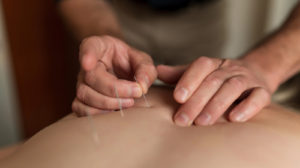
acupuncture.
Exercises to stretch or strengthen the appropriate muscles
or stabilize the joint.
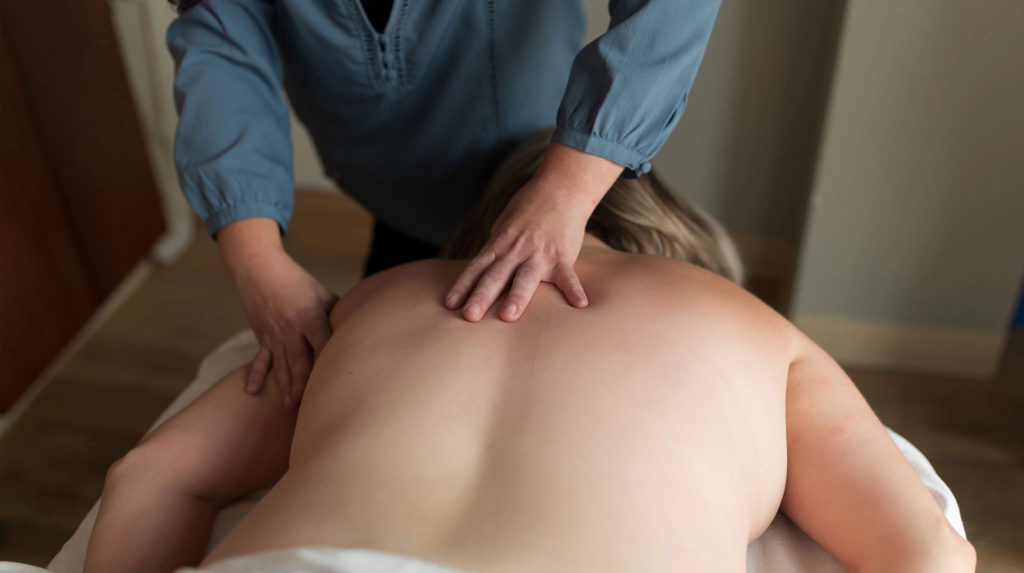
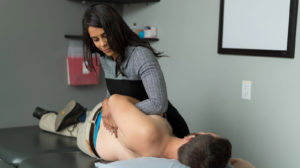
Manual therapy to improve the movement in the area.
|
Bakers Cyst:
A Bakers cyst is a benign cyst found in the back of the knee. It often presents following a meniscal (cartilage) injury or with arthritis. This cyst forms when part of the synovium or bursa sac is pushed to the back of the knee. This is usually not symptomatic but should be distinguished from a tumor or aneurysm. If it becomes symptomatic, surgery can be performed to remove it if conservative measures are ineffective.
Treatment includes:
Education about the condition and how to avoid making
it worse.
Therapeutic modalities to improve circulation and/or
reduce inflammation and pain such as ultrasound, laser,
interferential current, electrical muscle stimulation,
acupuncture.
Exercises to stretch or strengthen the appropriate muscles
or stabilize the joint.
Manual therapy to improve the movement in the area.
|
Chondromalacia Patella:
Chondromalacia patella means "sick cartilage of the kneecap". Progressive softening of the cartilage on the back side of the knee cap occurs. It's an overuse syndrome that stems from altered biomechanics of the leg. Pain is located behind the knee cap. Symptoms are similar to that of patella femoral syndrome.
Treatment includes:
Education about the condition and how to avoid making it worse.
Therapeutic modalities to improve circulation and/or
reduce inflammation and pain such as ultrasound, laser,
interferential current, electrical muscle stimulation,
acupuncture.
Exercises to stretch or strengthen the appropriate muscles
or stabilize the joint.
Manual therapy to improve the movement in the area.
|
ITB Friction Syndrome:
ITB Friction Syndrome is an irritation of a strong band of fascia running from the outside of the hip to the outside of the knee. When the band is tightened by a muscle in the hip it causes friction of the band over a bony bump on the outer knee. Symptoms include heat and swelling in the area, pain with activities such as running, bending the knee or sleeping on one side. This syndrome may be due to poor biomechanics, hip or knee muscle weakness, overtraining or overuse, and muscle imbalances.
Treatment includes:
Education about the condition and how to avoid making it worse.
Therapeutic modalities to improve circulation and/or
reduce inflammation and pain such as ultrasound, laser,
interferential current, electrical muscle stimulation,
acupuncture.
Exercises to stretch or strengthen the appropriate muscles.
Manual therapy to improve the movement in the area.
|
Patellar Tendonitis (AKA Jumper's Knee):
Tendonitis is an inflammation of a tendon. A tendon is the thick fibrous cord that attaches muscle to bone. Tendonitis causes pain and tenderness just outside a joint. At the knee, the patellar tendon attaches the quadriceps muscle from the patella to the tibia. When landing a jump, the knee bends (which stretches the tendon) while the quadriceps contracts to absorb the force which puts more force through the tendon. Excessive jumping and landing can cause an overuse injury called jumper's knee/patellar tendonitis.
Treatment includes:
Education about the condition and how to avoid making it worse. Sometimes a strap can reduce the stress and pain.
Therapeutic modalities to improve circulation and/or
reduce inflammation and pain such as ultrasound, laser,
interferential current, electrical muscle stimulation,
acupuncture.
Exercises to stretch or strengthen the appropriate muscles.
Manual therapy to improve the movement in the area.
|
Knee sprains:
A sprain is a stretch or tear of a ligament. A ligament is a strong band of connective tissue that connects one bone to another. Ligaments restrict excessive movement at a joint.
4 main ligaments in the knee include:
1) Anterior Cruciate Ligament - Common injury to the knee, especially during sports. Usually occurs as a result of a traumatic twisting impact, either with internal rotation and hyperextension (excessive straightening) or in external rotation and valgus (inward knee motion). Symptoms include immediate swelling, bruising, pain and instability causing the knee to give way while pivoting. There is often a loss of range of motion and function.
2) Medial Collateral Ligament - Very common ligamentous injury in the knee. Usually caused by a traumatic blow to the outside of the knee forcing the knee inward. Symptons include pain on the inside of the knee, difficulty weight bearing and reduced range of motion. Swelling maybe present but not always.
3) Posterior Cruciate Ligament - Less common knee injury. Usually occurs when the tibia (shin bone) is pushed backward overstretching the PCL. This often occurs while the flexed knee collides with a fixed object pushing the tibia posteriorly (backward) such as in a dashboard injury in a motor vehicle accident. Another mechanism of injury is a traumatic blow to a hyperextended knee or a direct force while falling on a fully flexed knee.
4) Lateral Collateral Ligament - Often injured with a cruciate ligament injury. It is usually caused by a hyperextension force in combination with a varus (outward) loading of the knee. Symptoms may include pain, swelling and bruising in the outer knee.
Treatment includes:
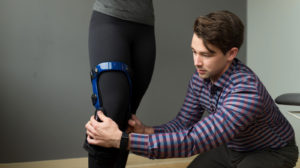
Education about the condition and how to avoid making it worse. If a cruciate ligament is ruptured, a surgical consult is warranted. Bracing may be helpful.
Therapeutic modalities to improve circulation and/or
reduce inflammation and pain such as ultrasound, laser,
interferential current, electrical muscle stimulation,
acupuncture.
Exercises to stretch or strengthen the appropriate muscles and stabilize the joint.
Manual therapy to improve the movement in the area.
|
Meniscus Injury:
An injury to the cartilage between the knee joint caused by a traumatic twisting and compressive motion. There are two types of meniscal injuries in the knee medial or inside and lateral or outside. Injury to the medial meniscus is much more common. These injuries can be caused with the knee in a hyperextended or hyperflexed position. Symptoms include:
1) Medial - Pain on the inside of the knee during and following activity. There can be a locking sensation if there is a tear or part of the meniscus is lodged in the joint. Pain is often felt in hyperextension or hyperflexion also by rotating the foot outward while the knee is flexed. There is often resulting weakness in the quadriceps.
2) Lateral - Pain on the outside of the knee during and following activity. There can be a locking sensation if there is a tear or part of the meniscus is lodged in the joint. Pain is often felt in hyperextension or hyperflexion also by rotating the foot inward while the knee is flexed. There is often resulting weakness in the quadriceps.
Treatment includes:
Education about the condition and how to avoid making it worse.
Therapeutic modalities to improve circulation and/or
reduce inflammation and pain such as ultrasound, laser,
interferential current, electrical muscle stimulation,
acupuncture.
Exercises to stretch or strengthen the appropriate muscles.
Manual therapy to improve the movement in the area.
|
Osgood-Schlatter Disease:
A condition that usually presents in the younger population. It is caused by the traction of the quadriceps muscles from the attachment on the lower knee. Symptoms mimic that of patellar tendonitis. Knee pain with jumping, running, bending the knee or sitting. This may be caused by trauma just below the kneecap and poor healing due to repeated traction from the quadriceps. This condition may also present with a large bony "bump" located just below the kneecap.
Treatment includes:
Education about the condition and how to avoid making it worse.
Therapeutic modalities to improve circulation and/or
reduce inflammation and pain such as ultrasound, laser,
interferential current, electrical muscle stimulation,
acupuncture.
Exercises to stretch or strengthen the appropriate muscles.
Manual therapy to improve the movement in the area.
|
Patella Dislocation:
Dislocation of the knee cap may result in the knee cap moving slightly out of place or being completely dislodged to the back of the knee. This may be caused by a combination of planting the foot and rotating the leg outward. A common injury in soccer and basketball. The kneecap may relocate after being displaced. This is known as a subluxation.
Treatment includes:
Education about the condition and how to avoid making it worse.
Therapeutic modalities to improve circulation and/or
reduce inflammation and pain such as ultrasound, laser,
interferential current, electrical muscle stimulation,
acupuncture.
Exercises to stretch or strengthen the appropriate muscles.
Manual therapy to improve the movement in the area.
|
|
|
| |
|